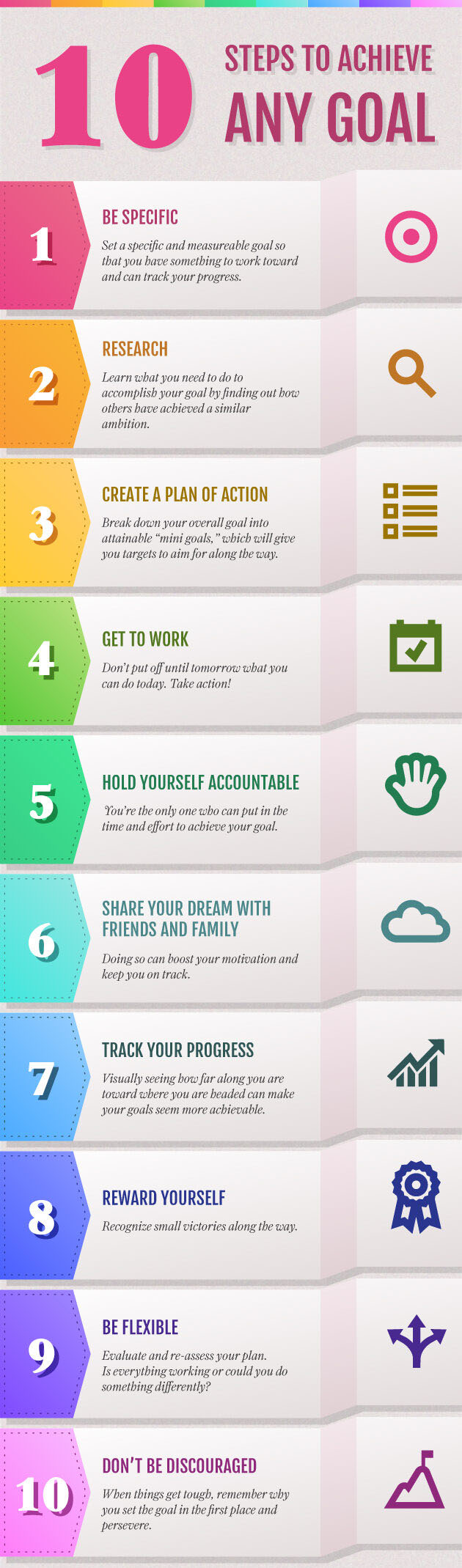
10 Steps To Achieve Any Goal

Most people have goals in mind throughout the year. However, finding the motivation to follow through with them is the real challenge.
Achieving your goal isn’t always easy, but one shouldn’t get discouraged. Whether you’re navigating life as a new parent, making a big change or simply chasing a longtime dream, these 10 steps can help you get there.
What are Goals?
A goal is a specific desired outcome you actively work toward. Unlike resolutions, which tend to be broad (like “be healthier”), goals are more focused and actionable (like “work out three times a week”). Objectives, meanwhile, are the measurable steps that help you achieve those goals.
There are different types of goals, and each can play an important role in shaping your outlook:
- Short-term goals are achievable in the near future—within days, weeks or a few months. Example: Clean out your closet this weekend.
- Long-term goals require planning and sustained effort, usually over several months or years. Example: Pay off student loans in five years.
- Personal goals are focused on your passions, mindset or lifestyle. Example: Start a daily journaling habit.
- Professional Goals relate to career growth or skill development. Example: Get a certification in your field.
- Health & Wellness Goals are centered around physical or mental well-being. Example: Cook at home more often instead of ordering takeout.
- Social Goals can help improve your relationships or community engagement. Example: Plan a monthly game night with friends.
Setting clear goals, and knowing what category they fall into, can help you stay focused and make progress throughout the year.
How to Achieve Your Goals
Setting a goal is the first step—but how do you actually follow through? Here’s a practical, step-by-step approach to help you turn any goal into reality. Let’s say your goal is to run a 5K race in three months. Here’s how to get started:
- Be specific
Start by clearly defining your goal. Instead of saying, "I want to run more," decide on something measurable, like "I want to run a 5K race in July." - Research
Spend time gathering information that’ll help you succeed. You might look up beginner 5K training plans, read tips on proper running form or find a local race to register for. - Create a plan of action
Break your goal into manageable steps. For running a 5K, that could mean following a 12-week training schedule, gradually increasing your distance each week. - Get to work
Don’t wait—start taking action, even if it’s small. Begin your training with a walk-run session today, setting the foundation for steady progress. - Hold yourself accountable
Build check-ins into your routine to stay on track. You might review your mileage every Sunday to see if you’re hitting your weekly goals. - Share your dream with friends and family
Talking about your goal can boost motivation and support. Let your friends and family know you're training for a 5K—they might cheer you on or even join you. - Track progress
Keep a log of your efforts. Recording each run in an app or journal lets you see how far you’ve come and can be incredibly motivating on tough days. - Reward yourself
Celebrate the progress, not just the finish line. After your first continuous two-mile run, go ahead and treat yourself. The same way you’d cheer on your child’s wins, it’s just as important to acknowledge your own. - Be flexible
Stay willing to adjust if things don't go perfectly. If you get sick or miss a week of training, don’t give up—simply revise your schedule and keep going. - Don’t be discouraged
Progress isn’t always linear. Whether you’re restarting after a break or setting new goals at a different stage of life, success can come at any time.
By following these steps, you can give yourself the structure, support, and flexibility needed to achieve your goals—no matter how big or small they may be.